Licensed HVAC pros, code-correct installs, cold air the same day

Air conditioning installation Leesburg FL built for Florida heat

When your old system quits in July, you need air conditioning installation Leesburg FL homeowners can count on. We size every unit with a Manual J load calculation, pull the permit, and install Carrier, Trane, or Daikin equipment that fits your home, not a generic box. Whether you need AC installation Leesburg FL for a new build or a full replacement after a compressor failure, we handle it start to finish.

↗
Fast online booking

Request service today

Tell us what is happening. Our local team will confirm your visit shortly.

Call Now 123456789 → No spam. No obligation. Just practical help.
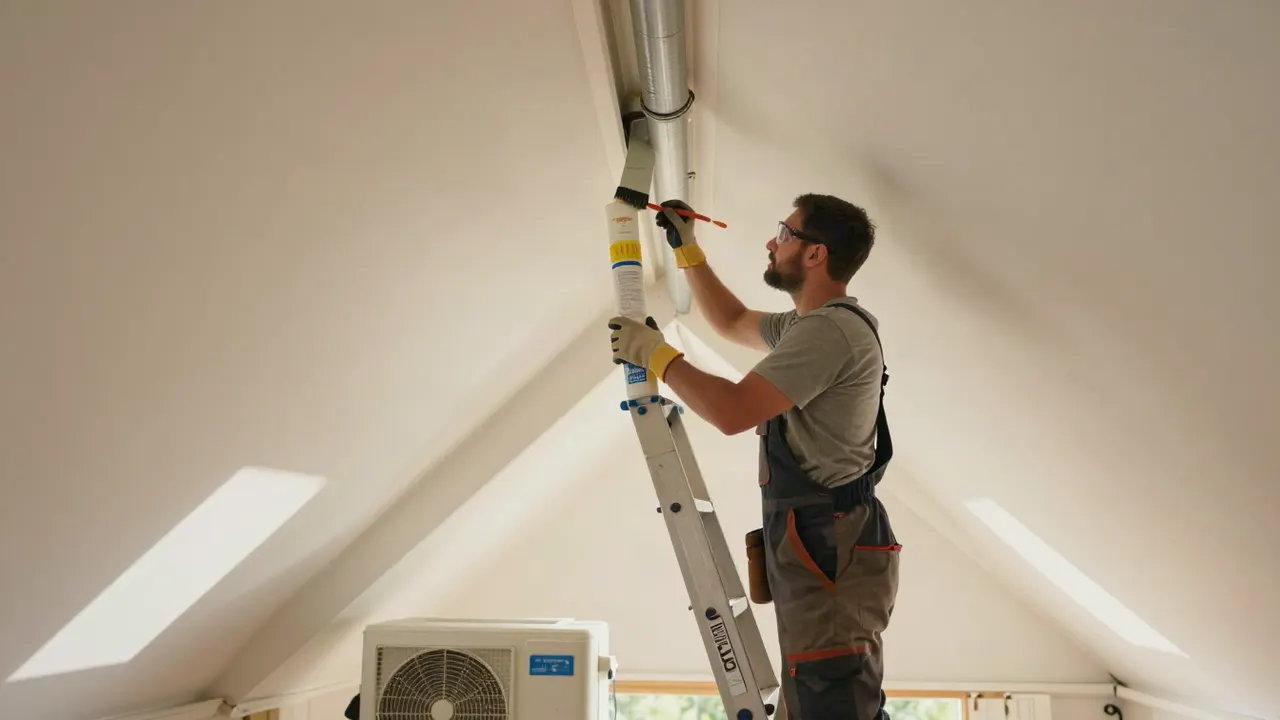
HVAC in leesburg : HVAC technician on a ladder in an attic, sealing a duct connection with mastic sealant and a brush
Careful work. Honest options.
About this service

What air conditioning installation Leesburg FL really involves

Air conditioning installation Leesburg FL is the licensed removal and replacement of your home's cooling system, including the condenser, evaporator coil, line set, thermostat, and duct connections, sized to your home and permitted under Florida code. It is not a swap-and-go job. We start with a Manual J load calculation, measure static pressure, inspect duct leakage, and confirm your electrical panel can carry the new unit before a single box is opened.

In Leesburg, most calls come from homes built between 1985 and 2005 where the original 10 SEER system finally died, or from newer builds where a builder-grade unit never kept up with west-facing rooms. Lake County summers push attic temps past 140 degrees, and a system that was marginal in April fails in August. If you are pricing new air conditioner installation Leesburg, get the load calculation first. Guessing tonnage is how homeowners end up with a unit that short-cycles and never actually cools.

  • ✓ Lower monthly cooling bills
  • ✓ Cooling that keeps up at 95 degrees
  • ✓ Fewer breakdowns, longer lifespan
  • ✓ Warranty and permit protection
What's included

What is included in a full installation

Every installation we do covers the equipment, the labor, the permit, and the cleanup. Here is what is in the standard scope, and what we quote separately if your home needs it.

✓

Manual J load calculation

We measure every room, check insulation and window orientation, and calculate the exact tonnage your home needs. This is the single most important step and it is included on every job, not sold as an add-on.

✓

Permit and inspection coordination

We pull the Lake County permit, schedule the inspection, and meet the inspector on site. You get the signed permit card and the closed permit record, which protects you at resale and keeps your manufacturer warranty valid.

✓

Equipment and line set

New condenser, matched evaporator coil, new line set, thermostat, and all connections. We braze with nitrogen, pull a deep vacuum with our vacuum pump, and charge R-410A refrigerant by weight to the manufacturer's spec.

✓

Old equipment haul-away

We recover refrigerant with a recovery machine, disconnect the old unit, and haul it off. You do not need to schedule a separate pickup or pay a disposal fee. The workspace is swept clean before we leave.

✓

Commissioning and walkthrough

We verify temperature split, check static pressure, and confirm airflow at every register. Then we walk you through the thermostat settings, the filter size, and the warranty registration so you know exactly how to run the system.

How it works

How our installation process works

01

In-home assessment

We measure your home room by room, check window orientation and insulation, and run a Manual J load calculation to get the right tonnage. We also inspect your ductwork for leakage and your panel for available amperage. This visit takes 60 to 90 minutes and you get a written proposal the same day.

02

Equipment selection

You choose from Carrier, Trane, Lennox, Goodman, Rheem, York, Mitsubishi Electric, or Daikin options at different efficiency tiers. We explain the SEER2 ratings, the rebate potential, and what each system realistically costs to run. No pressure, no upselling you into a variable-speed unit you do not need.

03

Permit and scheduling

We pull the Lake County permit and schedule your install, usually within three to five business days. If your system is completely down, we prioritize you. You get a confirmed arrival window and a call when the crew is on the way.

04

Installation day

A two-man crew removes the old equipment, sets the new pad and condenser, runs the line set, and installs the evaporator coil and thermostat. We braze with nitrogen, pull a deep vacuum with our vacuum pump, and weigh in R-410A refrigerant to spec. Most changeouts take six to eight hours.

05

Testing and walkthrough

We check the refrigerant charge with manifold gauges, verify temperature split, and confirm airflow at every register. Then we walk you through the thermostat, the filter schedule, and the warranty registration. You get a signed permit card and a clean workspace before we leave.
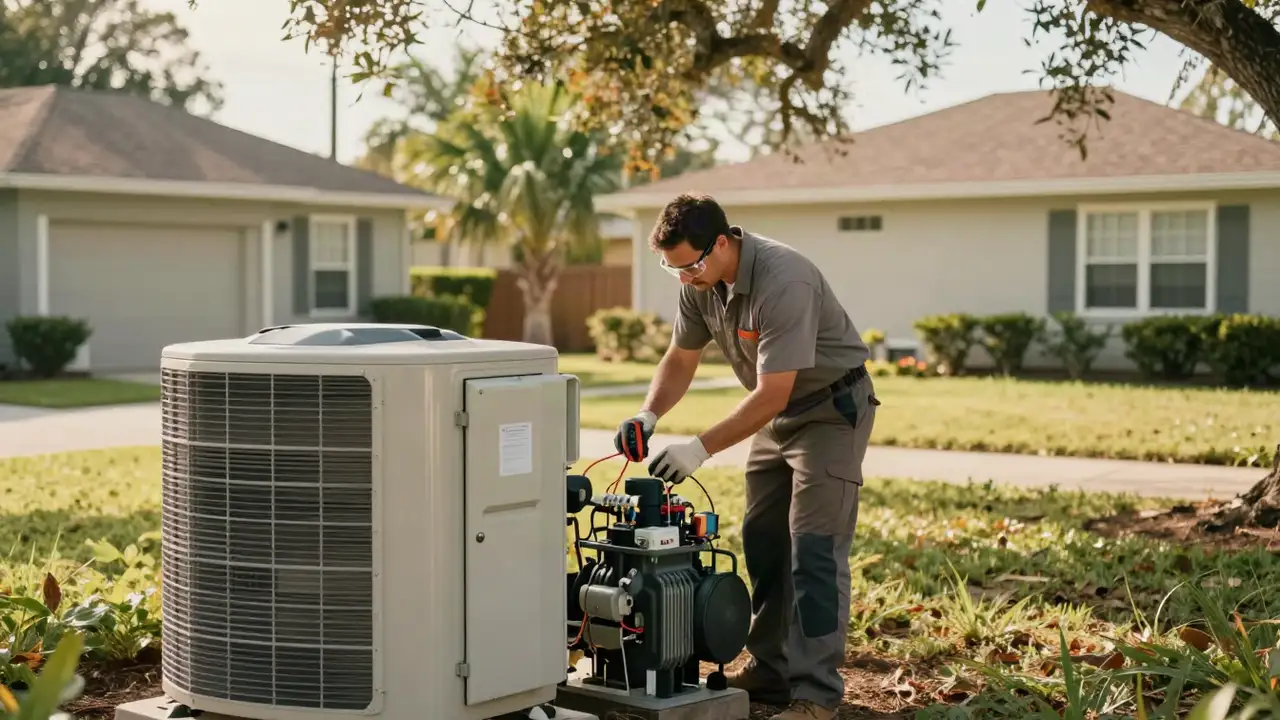
Tools & methods

Tools and methods we use on every job

Purpose-built equipment, used by trained technicians — so the job is done accurately the first time.

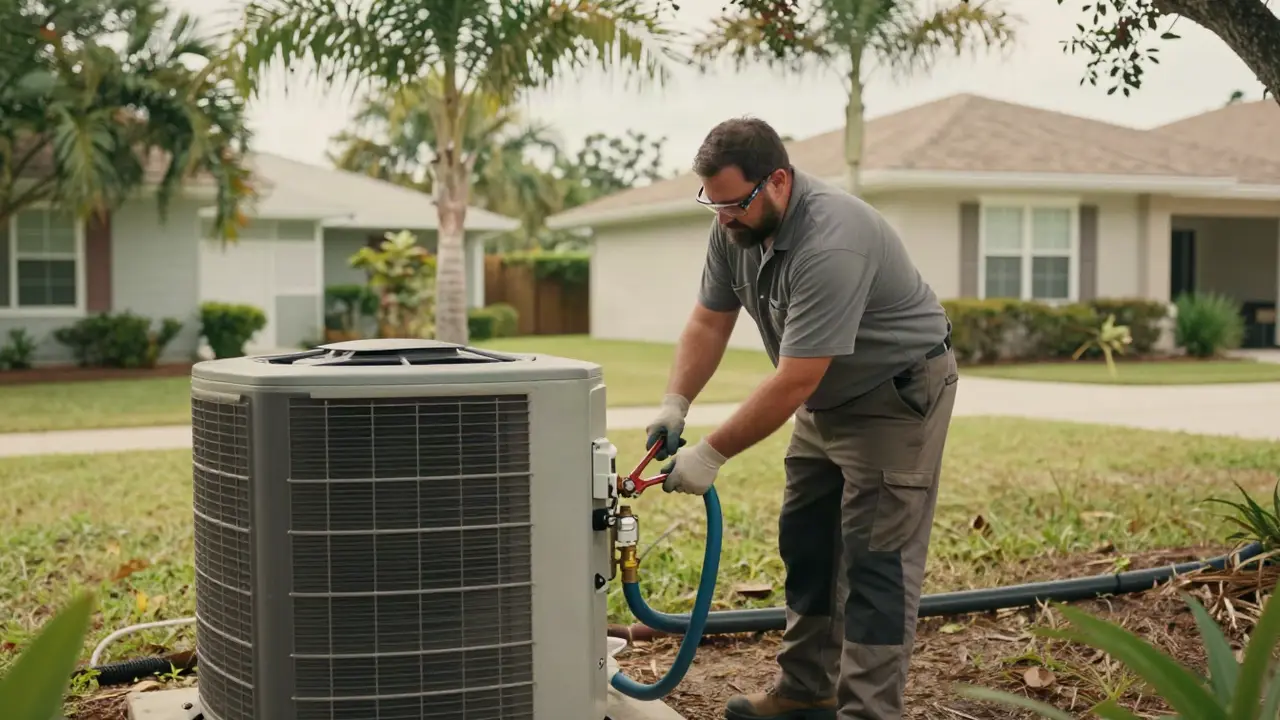
Manifold gauges

Used to read suction and liquid pressures and verify the refrigerant charge is correct for the outdoor temperature. We check charge after every install, not just at startup.

Vacuum pump

Pulls a deep vacuum on the line set before charging. Skipping this step leaves moisture in the system, which forms acid and destroys the compressor within a few years.

Refrigerant recovery machine

Recovers R-410A and R-22 from the old system before removal. Required by EPA Section 608 rules, and it keeps refrigerant out of the atmosphere.

Thermal imaging camera

Finds duct leakage, hot spots, and insulation gaps in walls and attics. We use it during assessment so the new system is not fighting a duct problem.

Leak detector

Electronic sniffers and UV dye pinpoint refrigerant leaks in coils, line sets, and fittings. Essential when a system is losing charge but the source is not obvious.

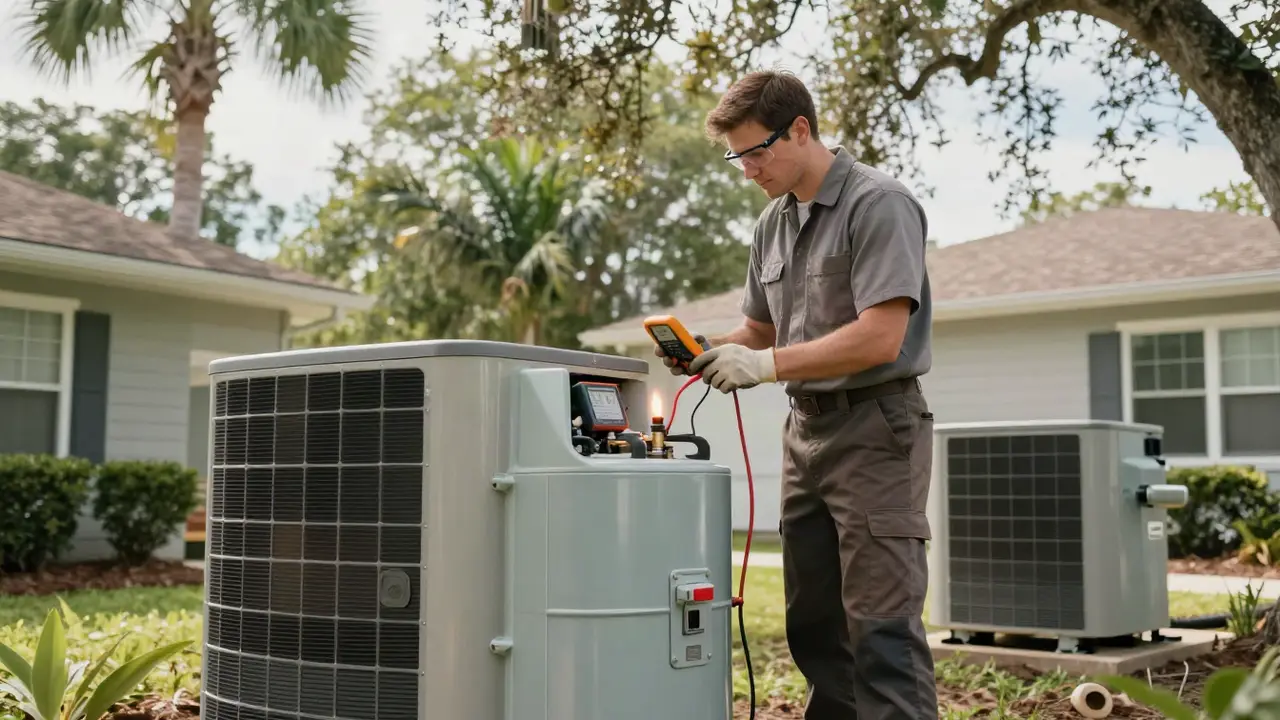
Multimeter

Tests capacitors, contactors, and control board voltage. We verify the electrical side of the new install and confirm the panel can carry the load.

Real results

Before and after.

1988 home, original 10 SEER system

Before

A 2,400-square-foot home off US-441 with the original 1988 system. Summer bills hit $310 a month, the house never got below 78 degrees, and the compressor was short-cycling every 10 minutes.

After

We installed a 4-ton 16 SEER2 Carrier system with a matched coil and new line set. First full summer bill dropped to $195. The house now holds 74 degrees at 3 p.m. in August.

Historic District home, tight attic

Before

A 1920s home in the Leesburg Historic District with a failing heat pump and no attic space for a standard air handler. Two other companies declined the job.

After

We installed a Mitsubishi Electric ductless system with three indoor heads and one outdoor condenser. No ductwork needed, no structural changes, and the home cools room by room.

New build with builder-grade equipment

Before

A 2014 home near Lake Griffin with a builder-grade 3-ton unit that never kept up. West-facing bedrooms ran 6 degrees warmer than the rest of the house all summer.

After

We ran a Manual J, found the home needed 3.5 tons, and installed a variable-speed Daikin system with a zoning damper for the west wing. Temperature variance dropped to under 2 degrees.

Problems we solve

Problems a new installation solves for good

Some AC problems are not worth fixing. When a system is past its useful life, replacement is cheaper than another summer of repairs.

Ask a pro →
01

AC not cooling and repair bills stacking up

We diagnose the root cause, then show you the math. If repair is under a third of replacement cost and the unit has life left, we repair. If not, we quote a new system with a written price and install it within days.

↗
02

Refrigerant leak that keeps coming back

We use a leak detector and thermal imaging camera to find the source. If the leak is in the evaporator coil or line set on an aging system, replacement is usually the smarter call, and we install a new matched system with a fresh line set.

↗
03

Frozen evaporator coil and poor airflow

We check the filter, blower, and refrigerant charge, then inspect duct leakage. If the ductwork is undersized, we correct it during installation so the new system gets the airflow it needs to run efficiently.

↗
04

Compressor failure on a system past 12 years

We quote both paths honestly. In most cases, replacing the full system is the better value, and we install a new unit with a full manufacturer warranty and a clean, code-correct install.

↗
Proof you can check

Licensed, certified, and reviewed

✓
NATE CertificationNorth American Technician Excellence
✓
EPA Section 608 CertificationU.S. Environmental Protection Agency
✓
Florida HVAC License (Class A)Florida Department of Business and Professional Regulation
✓
OSHA Safety ComplianceOccupational Safety and Health Administration
✓
ACCA Quality StandardsAir Conditioning Contractors of America
Good questions

Frequently Asked Questions

123456789 →

Most full system replacements in Leesburg run $5,500 to $12,000 installed, depending on tonnage, efficiency tier, and whether ductwork needs modification. A straightforward 3-ton 14.3 SEER2 changeout with existing ducts typically lands around $6,200 to $7,800. Higher-efficiency variable-speed systems with new line sets and thermostat can reach $11,000 to $14,000. We give you a written price before any work starts.

A standard residential changeout takes six to eight hours, so most homeowners have cold air the same day. If we are replacing ductwork, adding a return, or upgrading the electrical panel, plan on two days. New construction rough-ins and multi-zone Mitsubishi Electric installs can run three to four days. We confirm the timeline when we schedule.

Size depends on square footage, ceiling height, window area, insulation, and duct condition, not just square footage. A 1,800-square-foot Leesburg home with average insulation usually needs 3 to 3.5 tons, but a west-facing home with older windows may need 4 tons. We run a Manual J load calculation on every job so you get the right size, not a guess.

We do. Our technicians are NATE-certified and EPA Section 608 certified, and we work under a Florida HVAC license (Class A). We install Carrier, Trane, Lennox, Goodman, Rheem, York, Mitsubishi Electric, and Daikin equipment, and we pull the Lake County permit on every job. Call us and we will schedule your in-home assessment.

Ready when you are

Get your air conditioning installation Leesburg FL scheduled

Licensed, insured, and permitted on every job. Call us today for a same-day assessment and a written price on your new system. We install next business day when your old unit is down.

Schedule Assessment 123456789 →
Request an appointment

Get in touch

Call us any hour, any day. We answer live, ask what your system is doing, and give you a service window. Most Leesburg calls get a same-day visit, and emergencies get priority. Prefer to book ahead? Reach out by phone or email and we will get you on the schedule.

Call anytime123456789Email the officeinfo@leesburghvacpros.com
Office hoursOpen 24 hours · 7 days a week
Tap to call123456789